

 Facebook
 X
 Pinterest
 Copy Link
Vacation Homes in Northern Michigan: A Complete Buyer’s Guide
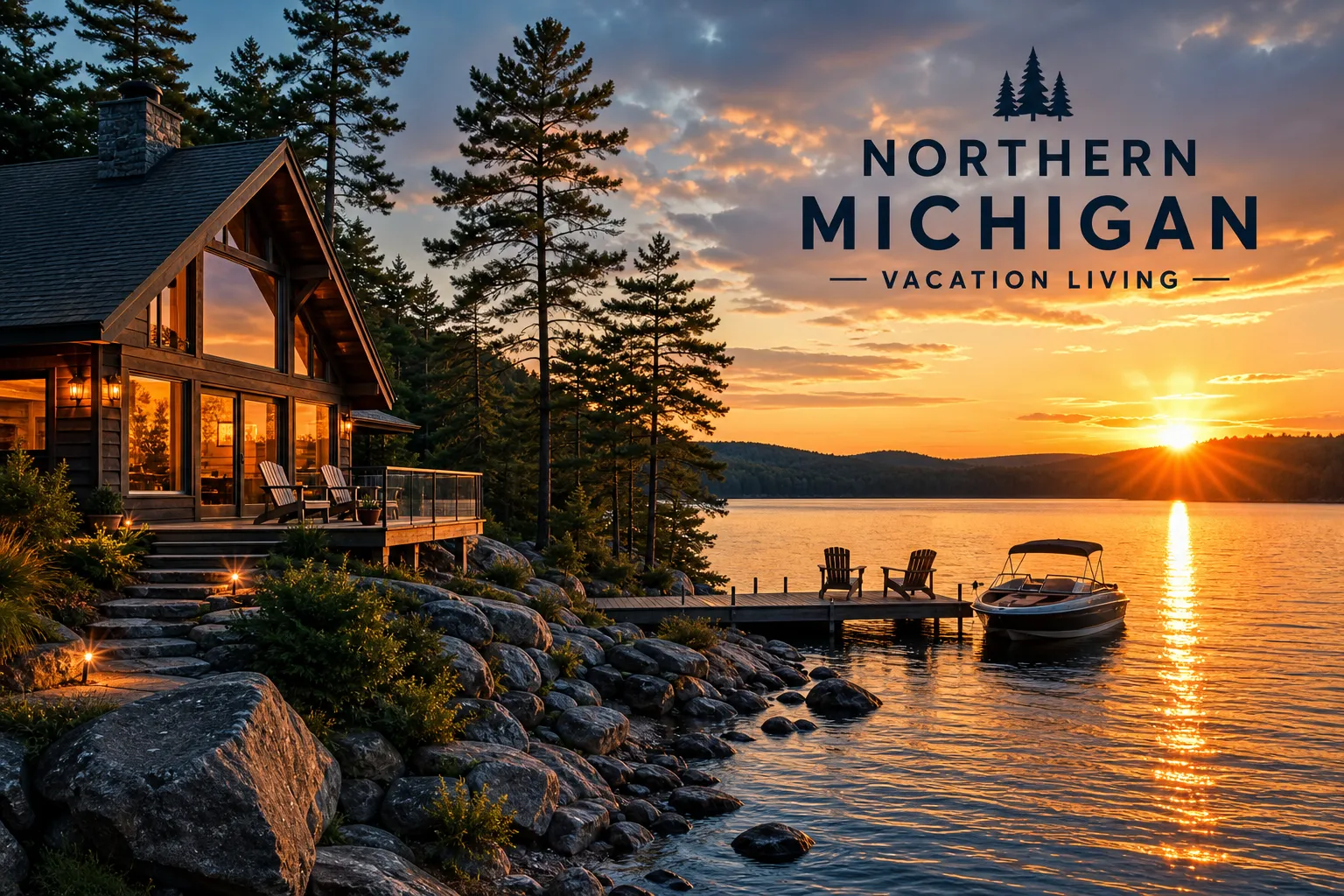
There’s a reason so many Michigan families talk about buying a place “up north” as though it’s a lifelong goal. The idea of waking up to a lake view, spending slow mornings on a screened porch, and having your own retreat waiting for you every summer has a pull that’s hard to argue with. Vacation homes in Northern Michigan are widely regarded as among the state’s most compelling real estate opportunities, drawing buyers who want both personal enjoyment and long-term value. Whether you’re eyeing Traverse City vacation homes, Petoskey vacation cottages, or lakefront cabins in Northern Michigan’s quieter corridors, the region consistently delivers on both fronts.
That said, buying a second home is genuinely different from buying a primary residence. The financing works differently, the insurance coverage has gaps that can catch you off guard, seasonal access affects property value in ways that aren’t obvious from a listing photo, and short-term rental regulations vary by municipality in ways that matter if you plan to rent. This guide walks through all of it: where to look, what to expect across four seasons, how rental income realistically works, and what to verify before you make an offer. Navigating a niche market like Northern Michigan gets considerably easier when you have someone in your corner who knows both the vacation home side and the primary home side of the equation.
Where to start your search: top towns for buying up north
Northern Michigan is a big market, and the right town depends almost entirely on what you want the property to do for you. Rather than picking a town based on name recognition alone, think first about your lifestyle priorities and rental goals, then let that narrow the geography.
Traverse City, Leelanau Peninsula, and the all-around markets
Traverse City is the most versatile starting point in the region. You’ll find a mix of downtown condos, Grand Traverse Bay waterfront homes, and forested cabins near Sleeping Bear Dunes, along with year-round tourism that supports rental demand in every season. For buyers who want scenery over activity, the Leelanau Peninsula towns of Glen Arbor, Leland, and Suttons Bay deliver some of Northern Michigan’s most photographed shoreline alongside a quieter small-town feel. Glen Arbor is the go-to for dunes and beach access; Leland has a historic fishing-village character that buyers consistently fall for.
Petoskey, Harbor Springs, and Charlevoix: the resort-town tier
Petoskey and Harbor Springs represent the upscale end of the resort-town market, with walkable historic downtowns, Little Traverse Bay views, and easy access to Boyne Highlands and Nub’s Nob for winter recreation. These are strong picks for buyers who want a polished, four-season property with both summer and ski-season rental appeal. Charlevoix is the best choice for boat-centered buyers, thanks to its rare three-water setting on Lake Michigan, Round Lake, and Lake Charlevoix. The marina culture and walkable downtown make it one of the most in-demand second-home markets in the state.
Torch Lake, Boyne City, and the quieter corridors
Torch Lake and Elk Rapids are built around premium water quality and a more secluded atmosphere. If your top priority is sitting on genuinely clear, sandy-bottomed water away from the larger resort crowds, this corridor delivers. Boyne City combines Lake Charlevoix access with proximity to Boyne Mountain, which makes it a consistent favorite for families and investors alike. It has year-round activity that most purely seasonal markets can’t match.
Seasonal access for vacation homes in Northern Michigan
Most buyers think primarily about July when they picture their vacation home, and that’s the fun part. But owning a property in Northern Michigan means making decisions that affect how it functions in October, January, and April too.
Summer and fall: the seasons you’re buying it for
Summer (June through August) is peak season by every measure: occupancy rates, nightly prices, and personal enjoyment. Fall foliage in early to mid-October is a strong secondary draw, especially around Traverse City, the Leelanau Peninsula, and Petoskey. Shoulder-season demand continues to be meaningful in this region, and well-marketed properties can see strong October weekend demand that extends the earning season well beyond Labor Day.
Winter and spring: what buyers often overlook
Before you close, you need direct answers to a few unsexy questions: Is the road plowed or seasonally closed? Is the property winterized or is it set up for year-round use? What is the age and condition of the well and septic, and are they rated for cold-weather operation? Properties in Boyne City, Petoskey, and Harbor Springs have real winter rental appeal tied to nearby ski resorts, but many lakefront cabins in more remote areas are genuinely warm-weather properties only. Knowing which category your target home falls into changes the purchase math considerably.
Rental income potential for vacation homes in Northern Michigan
Rental income is real in Northern Michigan, but it’s not automatic. The right property in the right location with the right amenities can meaningfully offset your carrying costs. The wrong combination, or a property in a municipality with restrictive short-term rental rules, may not perform the way you’re expecting.
Seasonal nightly rates and the amenities that move the needle
Premium waterfront homes in Northern Michigan averaged $432 to $446 per night during peak summer in 2026, according to regional market data. Shoulder seasons (spring and fall) generally run $235 to $295 for comparable properties, and winter drops to $139 to $173 for most markets outside ski-adjacent areas. Lakefront access and private docks are the single biggest driver of nightly rate premiums, with waterfront properties outperforming inland homes by 30% to 50% on revenue per available rental night. Hot tubs add a meaningful but smaller bump; Wi-Fi and pet-friendly policies help a property compete but don’t produce the same dramatic rate increase.
Platforms and property managers worth knowing
Vrbo is a leading platform for Northern Michigan vacation rentals and a strong starting point for owners looking to maximize listing exposure. Among regional property managers, Vacasa holds about 148 Northern Michigan listings and offers a national option with meaningful regional presence. Northern Michigan Escapes claims the largest regional footprint, while Vacation Properties of Northern Michigan earns high traveler ratings, averaging 4.91 in the Harbor Springs market based on available review data. Choosing the right management partner is as important as choosing the right platform. Your occupancy rate will reflect both decisions.
Financing and insurance: how a vacation home purchase works differently
Second-home financing surprises a lot of buyers who assume it works the same as their primary home purchase. It doesn’t, and understanding the differences before you start shopping saves real time and frustration.
What to expect on the mortgage side
Second-home mortgages typically require a down payment of 10 to 20 percent and carry rates that run roughly 0.25 to 0.75 percent higher than primary residence rates, typical industry ranges that can vary by lender and borrower profile. In Michigan’s current market, that puts a 30-year second-home loan in approximately the 7.0 to 7.5 percent range. The lender distinction between a “vacation home” and an “investment property” also matters: the classification affects your rate, your terms, and what documentation you’ll need to provide. Get pre-approved specifically for a second home before you start touring properties. Don’t assume your existing pre-approval from a primary home purchase transfers over.
Insurance coverage for a seasonal or lakefront property
Standard homeowners policies regularly exclude or sharply limit coverage for seasonal properties, and the gaps are significant for Northern Michigan buyers. Flood coverage for rising lake water is typically excluded outright and requires a separate FEMA flood policy. Docks, piers, and boathouses are often only partially covered under “other structures” provisions, and ice or freeze damage to those structures may be excluded entirely. If you plan to rent the property short-term, you’ll also need rental-use liability coverage, because most standard policies exclude business activity. Ask your insurance agent specifically about each of these categories before you close.
What to look for in the property before you make an offer
The moment you walk through a Northern Michigan cabin for the first time, the emotional pull is real. The light off the water, the smell of pine, the way the back porch just sits there waiting. That feeling is valuable, and it’s also exactly when you need to shift into verification mode.
Lakefront versus inland: understanding the tradeoff
Lakefront properties command the highest nightly rates and deliver the strongest personal enjoyment, but they also come with premium prices, higher insurance costs, and more complex maintenance requirements. Inland cabins or forested properties can still perform well on rental platforms and often cost significantly less to buy and insure. For buyers with tighter budgets or who prioritize personal use over rental income, an inland property within a few minutes of the water can be a genuinely smart choice.
Key questions to ask before closing
Run through this list before you move forward on any property. First, confirm road access: is it plowed year-round, or is it a seasonal or private road? Second, get the well and septic inspected and documented. Michigan requires at least 50 feet of separation between a private well and a septic system per state health code, and undersized drainfields are one of the most common inspection findings in this market. Third, check the short-term rental regulations in the specific municipality. Traverse City requires a city license and restricts vacation home rentals to specific zoning districts; other Northern Michigan towns have their own rules, and ordinances can change, so verify directly with the city or township before you close. Fourth, review any HOA restrictions and ask for verified rental income history if the property has operated as a rental.
Why the right agent makes this purchase easier than you’d expect
Many buyers shopping for a vacation home in Northern Michigan are already primary homeowners somewhere else in Michigan. That means the agent who serves them best isn’t just someone who knows Petoskey or Traverse City, it’s someone who understands how the two purchases connect in terms of timing, equity, and financing. That dual-market perspective is rarer than you’d think, and it matters when you’re potentially selling or refinancing a primary home to fund the purchase of a second one.
Allison Thurston at CENTURY 21 Signature Realty brings exactly that combination. She works across Northern Michigan vacation properties and the Tri-Cities primary home market, which gives her clients a real advantage when the two transactions overlap. She’s directly accessible by phone and email, no team handoffs, no middlemen, and she’s backed by the resources and reach of the CENTURY 21 brand. If you’re starting to think seriously about owning a place up north, that’s exactly the conversation worth having sooner rather than later.
Ready to start the search?
Owning a vacation home in Northern Michigan is a rewarding purchase, one that rewards buyers who go in with clear eyes: a town that fits both your lifestyle and your rental goals, a realistic picture of how the seasons affect access and income, the right financing and insurance in place before you shop, and honest answers to the property questions that matter.
None of this has to feel complicated when you have the right person guiding you through it. Reach out directly to start the conversation. Allison Thurston knows both the Northern Michigan vacation market and the mid-Michigan primary home market, and she can help you think through how this purchase fits into your broader Michigan real estate picture. Connect with Allison Thurston at CENTURY 21 Signature Realty to get started.


